
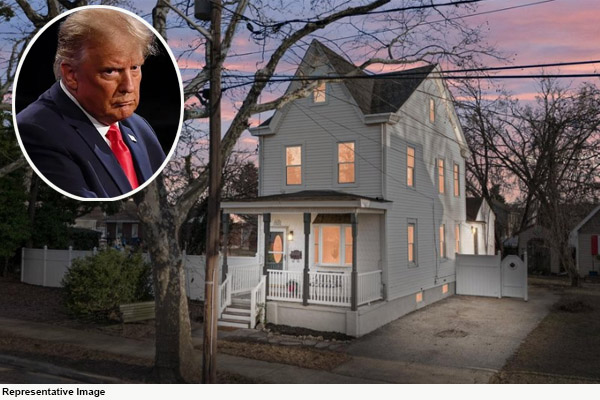
Blackstone shares fell sharply after US President Donald Trump revealed plans to prohibit big institutional investors from purchasing single-family homes.
Trump declares his intention to limit institutional purchases of single-family houses
On January 7, 2026, President Trump wrote on Truth Social that he is acting right now to stop big institutional investors from purchasing more single-family houses. He referred to the action as a component of larger initiatives to increase home affordability and urged Congress to enact the restriction. In reaction, shares of companies like Blackstone plummeted, dropping as much as 9% before closing at about 6%.
The announcement draws attention to persistent worries about the expense of homeownership, with Trump pointing out that corporate purchasing has made the American Dream unaffordable for many, particularly younger buyers.
The proposal’s specifics and viability
Trump did not explain how the ban would be implemented solely by administrative order. According to reports, congressional legislation may be necessary, akin to previous bipartisan proposals that attempted to restrict hedge funds and private equity from making large purchases of rental properties.
Less than 1% of all single-family residences or 3–4% of single-family rentals are owned by institutional investors nationwide, although their activity is concentrated in some cities, such as Atlanta and Las Vegas. The plan does not address current assets; instead, it focuses on future purchases.
Impact on the market and professional opinions on efficacy
Investor fears about possible constraints on an expanding rental sector led to quick stock drops for Blackstone and comparable companies. However, economists point out that huge institutions only make up around 3% of all house sales, and that low inventory and high mortgage rates—rather than institutional demand alone—are the main causes of the wider affordability issue.
Some advocated for more drastic measures, such as compelling the sale of existing holdings. Due to supply limits, several market observers noted a limited overall impact.
In high-investor regions like Nevada, real estate experts voiced conflicting opinions, pointing to possible advantages for first-time purchasers but doubts about implementation.