
Iran and the United States are set to resume nuclear talks in Oman on Friday, negotiations that were derailed in June by a 12-day war launched by Israel against Iran and subsequent waves of nationwide protests that led to deadly crackdowns by Tehran.
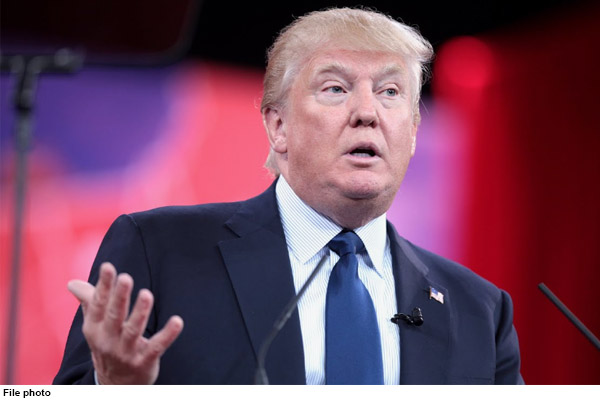
The talks come as President Donald Trump is ratcheting up pressure on the Islamic Republic, warning of potential US military action if Iran continues with mass executions linked to the protests – and re-establishing Iran’s nuclear program as a central foreign policy battleground after months of regional tensions.
Iran-US Talks
The Oman meeting is the latest attempt to restart negotiations on Tehran’s nuclear program after five rounds of talks in Rome and Muscat last year, which were interrupted by the June conflict.
The Israeli campaign, which lasted 12 days, included US strikes on Iranian nuclear sites. Iran later admitted in November that the attacks forced it to halt all uranium enrichment, although International Atomic Energy Agency (IAEA) inspectors have been unable to visit the bombed facilities.
Enrichment remains suspended, but the broader nuclear dispute remains unresolved, with Washington and Tehran returning to the negotiating table amid deep mistrust and increasingly divergent objectives.
Diplomacy Backed by Force
Trump initiated the current diplomatic effort by writing directly to Iran’s Supreme Leader, Ayatollah Ali Khamenei, in early 2025.
Trump sent the letter to Khamenei on March 5, 2025, then gave a television interview the following day in which he acknowledged sending it. He said: “I wrote him a letter saying, I hope you’ll negotiate because if we have to go militarily, it would be a terrible thing.” This message set the tone for the administration’s approach: new diplomacy under “maximum pressure,” coupled with sanctions and repeated hints that Iran’s nuclear infrastructure could be targeted.
Khamenei has warned that Iran will retaliate against any attack – a threat made as the Islamic Republic faces internal tensions following protests and crackdowns.
Oman’s Role as Mediator
Oman has once again positioned itself as a key mediator, facilitating contact between Iranian Foreign Minister Abbas Araghchi and US Middle East envoy Steve Witkoff. The two officials met face-to-face after indirect talks, a rare occurrence given the lack of formal diplomatic relations between the two countries for decades.
However, the process has not been smooth. Witkoff faced criticism after suggesting that Iran could be allowed to enrich uranium up to 3.67% – the level stipulated under the 2015 nuclear agreement negotiated under former President Barack Obama.
Trump withdrew the United States from that agreement in 2018, and his administration is now insisting that Iran must accept zero enrichment under any new deal – a condition that Tehran has repeatedly rejected.
What Does the US Want?
These negotiations are taking place under the shadow of explicit threats from Trump, who has presented the talks as a choice between a deal and military action.
The Trump administration is seeking a comprehensive agreement that goes beyond the nuclear issue, including:
1. Zero uranium enrichment and verification of non-weaponization
2. Major restrictions on Iran’s ballistic missile program
3. An end to support for regional proxy forces
Trump has previously warned that if diplomacy fails, there will be “bombing like they’ve never seen before.” Recent military incidents have also heightened tensions, including reports this week of an Iranian drone being shot down near the USS Abraham Lincoln.
Sanctions relief first, defense a ‘red line’
Iran is expected to push for a narrow agreement focused on economic relief, demanding the lifting of sanctions in exchange for nuclear concessions.
Tehran has declared its missile program and national security posture a “non-negotiable” red line, and Iranian officials have consistently rejected Washington’s insistence on eliminating all enrichment.
For Iran’s leadership, these negotiations are also taking place under intense domestic pressure following protests that began in late December amid the collapse of the rial currency, which escalated into nationwide demonstrations.
Authorities launched a crackdown that killed thousands and led to the detention of thousands more.
What worries the West
Iran has long maintained that its nuclear program is peaceful, but officials have increasingly signaled that weaponization is possible.
Iran is currently enriching uranium to 60% – close to weapons-grade levels – making it the only country in the world that does not have a declared nuclear weapons program yet has reached this level.
Under the 2015 agreement, Iran was limited to 3.67% enrichment and a stockpile of 300 kilograms. According to the IAEA’s most recent assessment, Iran’s uranium stockpile is approximately 9,870 kilograms, with a portion enriched to 60%.
US intelligence agencies assess that Iran has not yet restarted a formal weapons program, but it has “undertaken activities that would put it in a better position to build a nuclear device if it chose to do so.”
The Proposed Deal: A Three-Year Freeze
Despite public intransigence from both sides, mediators from Qatar, Turkey, and Egypt have presented a potential framework.
Under that proposal, Iran would halt enrichment for three years and transfer its enriched uranium stockpile to a third country, allowing time for a longer-term agreement.
Analysts are skeptical whether this plan can bridge the main divide: Washington’s demand for zero enrichment versus Tehran’s insistence on maintaining its sovereign right to enrich uranium.
A Long History of Hostility
These negotiations are taking place against the backdrop of nearly half a century of US-Iran hostility.
Iran was once a key US ally under Shah Mohammad Reza Pahlavi, until the 1979 Islamic Revolution overthrew the monarchy and established the current theocratic system.
Later that year, the attack on the US embassy in Tehran led to a 444-day hostage crisis, severing diplomatic relations. The Iran-Iraq War, the US role in the Gulf conflicts, and decades of sanctions and proxy conflicts have further deepened the mistrust.
The 2015 nuclear agreement briefly improved relations, but Trump’s withdrawal from the deal in 2018 reignited tensions that persist to this day.
(With agency inputs)