
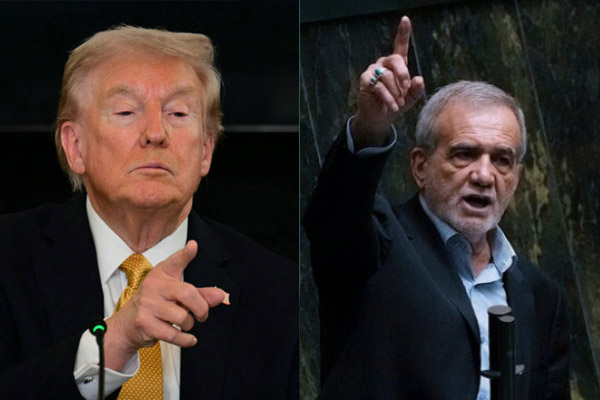
Ceasefire Talks: According to reports, the United States has sent a 15-point proposal to Iran aimed at ending the conflict. This conflict began on February 28, following the collapse of nuclear negotiations between the two nations.
Two Pakistani officials told the Associated Press on Wednesday that Iran has received a 15-point proposal from the U.S. side regarding the attainment of a ceasefire.
Meanwhile, according to IRNA, Iran’s Ambassador to Pakistan, Reza Amiri Moghaddam, stated that if Tehran and Washington agree to hold talks, Pakistan would feel “ready and honored” to host the negotiations.
What is the U.S. Proposal?
Broadly outlining the proposal, Pakistani officials reportedly indicated that it encompasses issues such as sanctions relief, civilian nuclear cooperation, the scaling back of Iran’s nuclear program, oversight by the International Atomic Energy Agency (IAEA), missile limitations, and the authorization of maritime traffic through the Strait of Hormuz.
Although further details remain unclear at this stage, President Trump has publicly signaled that any peace agreement must include a stipulation ensuring that Iran never acquires nuclear weapons or enriches radioactive material for civilian purposes.
Sources told the Associated Press that this plan was delivered to Iran by mediators from the Pakistani government. Pakistan has offered to once again host negotiations between Washington and Tehran.
Iran has not yet commented on this proposal.
Iran Adopts a Harder Stance on Talks
Senior sources in Tehran have told Reuters what their demands would be should mediation efforts lead to serious negotiations.
A report published on Tuesday claimed that Iran’s Revolutionary Guards are steadily increasing their influence within the decision-making process and that they will demand significant concessions from the United States. Sources told Reuters on Tuesday that in any negotiations with the United States, Iran would not only demand an end to the war but also seek concessions that could constitute “red lines” (unacceptable limits) for U.S. President Donald Trump—such as guarantees against any future military action, compensation for damages incurred during the conflict, and formal control over the Strait of Hormuz.
The sources also indicated that Iran would refuse to negotiate any limits on its ballistic missile program. This issue remained a “red line” for Tehran even during the talks that were underway before the attacks launched by the U.S. and Israel last month.
Trump’s Mixed Signals Regarding Negotiations
Trump stated on Monday that, more than three weeks after the outbreak of hostilities, Washington has already held “very strong talks” with Tehran; however, Iran has publicly denied this claim.
Citing Iran’s ambassador to Pakistan, state media reported on Wednesday, “There have been no direct or indirect talks between Tehran and Washington.” This statement stands in contrast to U.S. President Donald Trump’s assertion that Iran is seeking to reach an agreement.
Three Iranian sources told Reuters that Iran has held only preliminary discussions with Pakistan, Turkey, and Egypt to gauge whether there is any ground for initiating talks with the U.S. aimed at ending the conflict.
These three Iranian sources further indicated that if such negotiations are arranged, Parliament Speaker Mohammad Baqer Qalibaf and Foreign Minister Abbas Araqchi would represent Iran in the talks. They also cautioned, however, that any final decision would ultimately be made by the hardline Islamic Revolutionary Guard Corps. On the other hand, according to reports, the Trump administration plans to deploy at least 1,000 troops from the 82nd Airborne Division to the Middle East in the coming days. Three individuals familiar with the plan disclosed this information to the Associated Press.
The Pentagon is also in the process of deploying two Marine units, which will increase the number of Marines in the region to approximately 5,000, alongside thousands of sailors.
(With inputs from Reuters and the AP)