
India-EU Free Trade Agreement: A Free Trade Agreement (FTA) is an agreement between two or more countries or groups that reduces or eliminates tariffs, quotas, and other trade barriers on goods and services, thereby promoting easier cross-border commerce, investment, and economic relations.
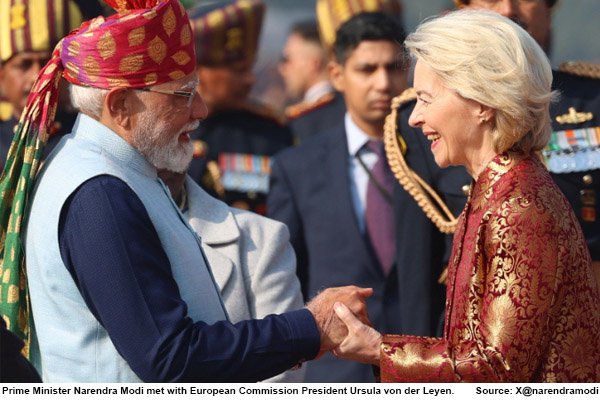
India and the European Union (EU) have successfully concluded long-running negotiations. This FTA, known as the “Mother of All Deals,” is scheduled to be officially announced tomorrow, January 27, 2026, at the India-EU Summit. Today (January 26, Republic Day), both EU leaders—Ursula von der Leyen (European Commission President) and António Costa (European Council President)—were present in Delhi as chief guests and praised the deal.
Latest information on the India-EU FTA (as of January 26, 2026):
Status
Negotiations have concluded after years of negotiations (resumed in 2022, originally started in 2007). An official announcement is expected today or tomorrow (January 26-27, 2026) during the India-EU summit in New Delhi.
Timing and context
EU leaders Ursula von der Leyen (President of the European Commission) and António Costa (President of the European Council) are in India as the chief guests for Republic Day (they participated in the parade on duty today).
The summit on January 27 will finalize the deal, along with a security/defense agreement and a mobility agreement for skilled workers/students.
Why now? Global trade tensions (especially US tariffs under the current administration) have accelerated this effort. This is India’s 9th FTA in 4 years (after agreements with the UK, Oman, New Zealand, etc.), which will help diversify exports amid protectionism.
Scale and Impact
Covers approximately 2 billion people (India + 27 EU countries).
Combined Economy: Approximately $27 trillion.
Bilateral Trade (Goods): Currently ~$136-137 billion (India has a surplus).
It is expected that tariffs will be eliminated on more than 90% of traded goods, boosting services, investment, and digital trade.
Key Concessions
India will reduce import tariffs on cars from 110% to 40% (gradually, for EU cars priced over €15,000). Benefits for Indian exports: Lower duties on textiles, clothing, footwear, pharmaceuticals, steel, jewelry, petroleum, and machinery – which will help counter US tariffs and lost EU GSP benefits (suspended for many products from 2023/2026).
Safeguards
India protects sensitive sectors such as agriculture and dairy.
Benefits for the EU
Improved access to India’s large market for cars, wine, spirits, machinery, and more.
What’s next? Announcement → Finalization of the final text → Ratification (requires EU Parliament approval, which could take more than a year) → Implementation (not immediately).
This deal is considered a game-changer for India’s export growth, job creation in labor-intensive sectors, and strategic partnership with Europe amid changing global alliances.
Other major Indian FTAs include
With the UK (recently signed)
Australia, UAE, EFTA (Switzerland, Norway, etc.)
Continuing: With Canada, GCC countries, etc.