
US-Iran Ceasefire Talks: Ceasefire negotiations between the United States and Iran are set to commence in Pakistan; however, media reports remain conflicting regarding whether the talks will be direct or conducted through a third party.
While many observers anticipate that the format of the talks will be indirect—with both sides occupying separate rooms and Islamabad officials shuttling proposals back and forth between the two parties, as reported by AFP—several other diplomatic arrangements are also being considered.
According to the Xinhua news agency, a source indicated that Pakistan is fully prepared for either scenario—whether it involves facilitating face-to-face negotiations or serving as a conduit for conveying messages between the two delegations. This uncertainty was further heightened by a report in *Dawn*, which characterized the upcoming dialogue as the “first direct high-level talks” between Tehran and Washington since the 1979 Revolution.
Top officials from both the U.S. and Iran arrived in Pakistan on Saturday. They are set to participate in the initial round of negotiations focused on how to transform their two-week-old ceasefire into a lasting peace.
As the U.S. delegation—led by Vice President J.D. Vance—and the Iranian delegation—led by Parliament Speaker Mohammad Bagher Ghalibaf—arrived in Islamabad, the status of the ceasefire appeared fragile.
Delegations to Meet PM Sharif
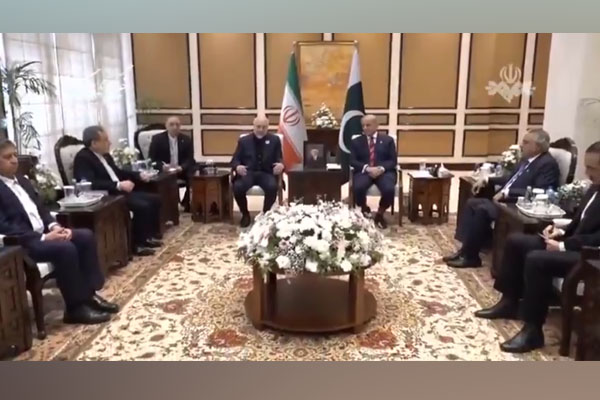
Representatives from both the United States and Iran have held separate preliminary meetings with Pakistani Prime Minister Shehbaz Sharif. According to Iran’s ‘Mehr’ news agency, a formal round of talks will commence only after these preliminary consultations have concluded.
Although the U.S. team, led by Vice President J.D. Vance, and the Iranian delegation, led by Parliament Speaker Mohammad Bagher Ghalibaf, have already arrived in Islamabad, there remains room for adjustments to the official schedule. It is currently unclear when the formal sessions will begin; however, Iran’s ‘Tasnim’ news agency has indicated that the Tehran delegation may meet with Sharif around 1:00 PM local time. Based on the outcomes of those discussions, the main negotiations could proceed later on Saturday.
Tasnim also refuted CNN reports suggesting that the talks would span several days; the agency stated that, according to current plans—provided everything proceeds as scheduled—the session would likely conclude within a single day.
Pakistan Ready to Mediate
A diplomatic source told AFP that Pakistan—which played a pivotal role in organizing this summit—has assembled a team of technical experts to assist in discussions regarding maritime navigation, nuclear protocols, and other critical areas. Acknowledging the gravity of the situation, Prime Minister Sharif warned that the efforts to resolve the conflict—sparked by U.S. and Israeli strikes on February 28 and Iran’s subsequent retaliatory actions—face “an even more difficult phase ahead.”
Sharif remarked, “This is a phase that… could be described as a ‘do or die’ situation.”
Alongside China, regional players such as Turkey and Egypt are also closely monitoring these developments. Notably, Beijing has been suggested as a potential guarantor for a final agreement, although its specific role in this regard remains unclear. Amidst these preparations, Iran maintains its stance that negotiations will not proceed until its preconditions—including a ceasefire in Lebanon—are met.
(With agency inputs)