
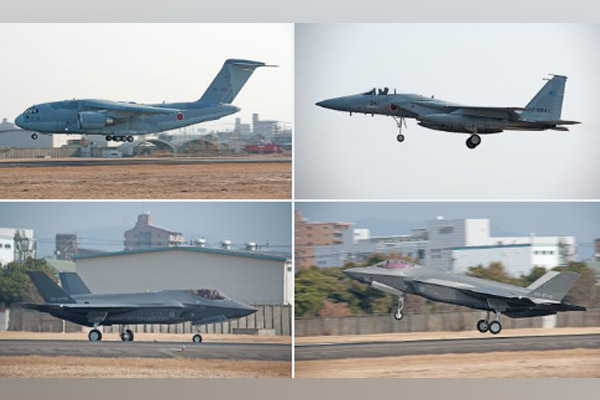
US-Iran tensions escalate: The US is mobilizing more forces in the Middle East for potential action against Iran, with more than 50 F-35, F-22, and F-16 fighter jets sent to the region in the past 24 hours, according to an Axios report, citing open-source flight radar data and a US official.
This comes after Iranian Foreign Minister Abbas Araghchi said they had reached a major understanding on several guiding principles that would serve as the foundation for moving forward and drafting the text of a potential agreement.
Araghchi further stated that the discussions in Geneva were “serious, constructive, and positive,” adding that “good progress has been made compared to the previous meeting, and we now have a clearer path forward.”
We are witnessing the largest U.S. Air Force combat buildup in Europe and the Middle East since the Gulf War, alongside major naval deployments.
This is not signaling “negotiations” with Iran, something is coming soon.
6 x USAF E-3G Sentry AWACS from the U.S. to Europe.
Over… pic.twitter.com/gysTLer2kY
— Suppressed News. (@SuppressedNws1) February 18, 2026
He told Iranian state television that different ideas were put forward and seriously discussed. He added that this does not mean a deal will be reached soon, but it is the beginning of the process. Iran announced on Tuesday that it would temporarily close the Strait of Hormuz for live fire drills, a rare show of force.
US President Donald Trump, who abandoned the nuclear deal with Iran during his first administration, has repeatedly warned Iran against using force to limit its nuclear program. Iran has said it will retaliate, while Trump has also warned Iran about the protesters killed.
By late January, as tensions escalated, the United States sent its aircraft carrier, the USS Abraham Lincoln, to the Arabian Sea. In the first week of February, the BBC reported that approximately twelve F-15 fighter jets, an MQ-9 Reaper drone, and several A-10C Thunderbolt II ground-attack aircraft were also deployed to Muwaffaq Salti Air Base in Jordan.
War in the Middle East will break out in a flash 💥
‼️ BREAKING – A batch of U.S. Air Force F-35’s have arrived in the Middle East to the U.S. Central Command Area of responsibility amid tensions with Iran and Russia in the region. pic.twitter.com/7d9Wh4atfj
— {Matt} $XRPatriot (@matttttt187) July 26, 2023
The USS Gerald R. Ford and its accompanying destroyers, the Mahan, Bainbridge, and Winston Churchill, have officially departed the US Southern Command zone and moved to the Mid-Atlantic.
According to the AP, an official stated that at the current pace, the strike group is still at least a week away from the Iranian coast. This change comes after a recent clash in which US forces shot down an Iranian drone near the USS Lincoln, shortly after Iran attempted to blockade a US ship in the Strait of Hormuz.
Arab countries along the Gulf have warned that any attack could escalate into a major regional conflict, as the Middle East grapples with the fallout from the Israel-Hamas war.
The Trump administration is pushing for a deal that would curb Iran’s nuclear activities and prevent it from developing nuclear weapons. Tehran maintains its nuclear program is peaceful and has refused to stop enriching uranium within the country or surrender its stockpile of highly enriched material.
Negotiations between Washington and Tehran had been ongoing for months before Israel launched a 12-day conflict with Iran in June, which stalled negotiations. During that conflict, the US attacked Iranian nuclear facilities, possibly destroying several centrifuges used to enrich uranium to near-weapons-grade levels. The Israeli strikes also significantly weakened Iran’s air defense system and hit parts of its ballistic missile capabilities.
Before the June conflict, Iran had enriched uranium to 60% purity, just short of technically weapons-grade material.
(Inputs from agencies)