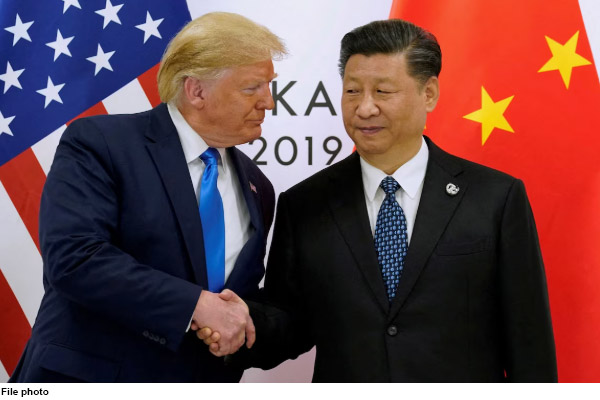
China vs America: According to a Reuters report, citing Washington’s ambassador, the United States has expressed concern over China’s growing presence in South Asia and is planning to provide American and related defense systems to Bangladesh’s next government as an alternative to Chinese hardware.
Bangladesh is scheduled to hold general elections on Thursday, following a youth-led uprising that ousted Prime Minister Sheikh Hasina in August 2024.
China recently signed a defense agreement with Bangladesh to build a drone factory. Furthermore, Bangladesh is in talks with Pakistan to purchase JF-17 Thunder fighter jets, a multirole combat aircraft jointly developed with China, the report said.
US Ambassador Brent T. Christensen told the news portal, “The United States is concerned about China’s growing influence in South Asia and is committed to working with the Bangladeshi government to clearly communicate the risks of certain engagements with China.”
He added, without sharing details, “The US offers Bangladesh a range of options to help meet its military capability needs, including US systems and those from its fellow partners to provide alternatives to Chinese systems.”
China’s Foreign Ministry said that as major strategic partners, China and Bangladesh have worked closely in the political, economic, and security sectors.
The ministry said in a statement to Reuters, “Our mutually beneficial and friendly cooperation is not directed against any third party, nor will we tolerate any third-party interference.”
Christensen also said that the Trump administration “would like to see good relations between Bangladesh and India to maintain stability in the region.”
Focus on Commercial Diplomacy
Christensen explained that many US companies are considering investing in Bangladesh, but they need the incoming government to demonstrate that it is “ready for business.”
He was quoted as saying, “Commercial diplomacy is one of our top priorities, and we look forward to working closely with the new government to build on the progress made with the interim government, particularly in strengthening commercial, economic, and security ties.”
Energy producer Chevron has been operating in Bangladesh for decades, but due to high taxes and difficulties in repatriating profits, only a few other US companies are present in the densely populated country of 175 million.
Currently, there are no Starbucks or McDonald’s outlets in Bangladesh.
The ambassador said the US would work with “any government elected by the Bangladeshi people.” The contest is between coalitions led by two longtime allies: the Bangladesh Nationalist Party (BNP) and the Islamist Jamaat-e-Islami.
Support for Rohingya Refugees
Speaking of the 1.2 million Rohingya refugees living in Bangladesh, the ambassador said the United States has been the largest contributor to humanitarian efforts.
“The US remains the largest contributor to the Rohingya refugee response and continues to maintain robust health programs in Bangladesh,” he was quoted as saying. He highlighted the new $2 billion global funding framework signed with the United Nations to improve such assistance, including in Bangladesh.
He encouraged other international donors to take a larger share of the responsibility.
He said, “The US cannot do most of the work alone. International partners need to increase their support for the Rohingya response.”
Recently, the UN refugee agency has faced difficulties in raising sufficient funds to help the Rohingya community, leading to shortages of food and the closure of some schools.
(With agency input)