
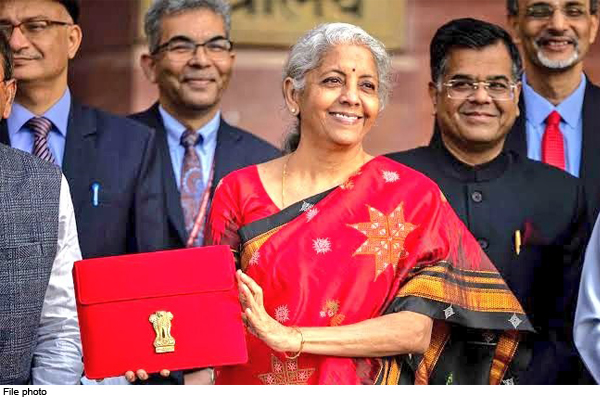
Union Budget 2026-27: Finance Minister Nirmala Sitharaman presented the Union Budget 2026-27 on February 1, 2026. It focuses on simplifying customs procedures, supporting domestic manufacturing, boosting exports, reducing the burden on healthcare/education/travel, and tightening compliance in areas such as trading and penalties.
No major changes to income tax slabs were announced (they will remain as per recent reforms, with zero tax up to a certain limit under the new regime). The main impact will be from changes in customs duties, TCS/TDS adjustments, excise duty changes, and other levies.
Here is a clear breakdown, based on the proposals, of what will become cheaper (due to duty exemptions/reductions, TCS reductions, etc.) and what will become more expensive (due to increases, removal of exemptions, or new/stricter regulations).
What will become cheaper?
These items/activities will benefit from customs duty exemptions/reductions, TCS reductions, or policy support:
Medicines for cancer and rare diseases — Exemption from Basic Customs Duty (BCD) on 17 cancer drugs + extension to medicines/food for 7 rare diseases.
Foreign education and medical treatment abroad — TCS under the Liberalised Remittance Scheme (LRS) reduced from 5% to 2%.
Foreign tour packages — TCS reduced to a uniform 2% (from 5% up to ₹10 lakh and 20% above that).
Personal imports (dutiable goods brought in for personal use, e.g., high-value items from abroad) — Duty reduced from 20% to 10%.
Seafood processing (for export) — Duty-free import limit for specified inputs increased from 1% to 3% of the previous year’s FOB export value.
Sports equipment — Policy support and duty relief to reduce costs.
Leather goods/products — Customs duty exemptions/support for the domestic sector. Microwave ovens — BCD exemption on specified parts used in manufacturing.
Smartphones, TVs, and consumer electronics — Duty rationalisation and manufacturing support (e.g., parts/components).
Solar panels and renewable energy items — Exemptions on components such as sodium antimonate; support for clean energy.
Lithium batteries/EV components — Duty cuts to promote electric vehicles and batteries.
Aircraft components (civilian, training, defence MRO) — Exemptions for parts in maintenance/repair/overhaul.
Other reliefs include simplified customs procedures (e.g., trusted importer system) and potential indirect benefits for EVs, critical minerals (e.g., monazite duty zero), and more.
What will become more expensive?
These will face higher duties, increased levies, removed exemptions, or stricter taxation:
Trading and stock market activities — Changes to Securities Transaction Tax (STT), buyback taxation (now treated as capital gains), and TCS on select items to curb speculation/arbitrage.
Alcohol, tobacco, cigarettes, and paan masala — Higher levies or rationalised but effectively more expensive in some cases (e.g., flat TCS at 2% but overall targeting sin goods).
Umbrellas and parts — Specific minimum duty introduced, making cheaper imports more expensive.
Some luxury/imported goods — Higher effective costs on watches, apparel, etc., through duty rationalisation.
Income tax non-compliance — Penalties for misreporting increased up to 100% of the tax amount; stricter enforcement on undeclared assets.
Coffee-related machines — Tax exemptions removed on roasting/brewing/vending machines (effective February 2, 2026). Other areas affected include scrap metal, coal (with higher levies in some reports), commercial LPG cylinders (price increases noted separately, although not directly a budget measure), and potential indirect increases on luxury goods.
The impact on final consumer prices depends on how manufacturers/retailers pass on the changes, supply chains, and GST (no major changes to GST have been reported here). Some measures are sector-specific rather than directly impacting retail (e.g., promoting exports/manufacturing).
This budget emphasises “ease of living” for essential goods/healthcare/education/travel, while promoting a self-reliant India and addressing global trade pressures.