
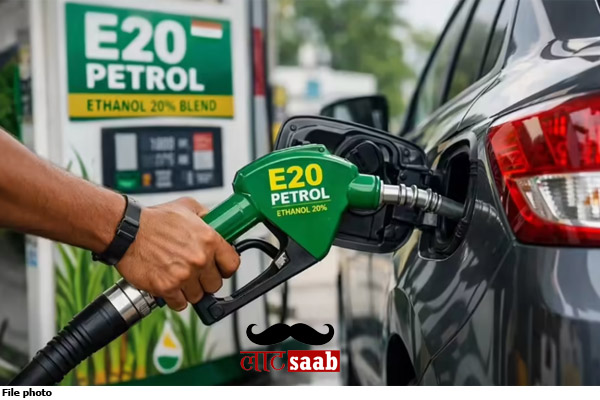
Ethanol-blended petrol (E20) has recently become a constant topic of discussion in the country. Divergent opinions among consumers, automotive experts, and the government have made this issue a focal point of debate.
Consumers in India harbor various perceptions and concerns regarding E20 petrol. Many believe the fuel is not entirely suitable for vehicles, fearing it could reduce mileage and potentially damage certain engine components over time. Furthermore, people question why the government does not sell this blend at a lower price, given that ethanol is being added to the petrol.
Consumers’ Right to Choose the Right Fuel
Additionally, a section of people believes the government should offer consumers a choice of fuels. They argue that the market should provide various options—such as pure petrol, E20, E85, and E100—allowing individuals to select fuel based on their needs, budget, and vehicle capabilities. They also suggest that the pricing of these fuels should reflect their composition and quality, thereby granting consumers genuine freedom to choose according to their preferences.
They maintain that since consumers pay for the fuel, they should have the right to decide which type to use. According to them, limiting fuel options infringes upon consumer choice and freedom.
Insurance Claims Will Not Be Invalidated
The Ministry of Petroleum and Natural Gas has assured vehicle owners that using ethanol-blended petrol (EBP) will not invalidate their insurance claims. In an official statement, the Ministry noted, “Ethanol blending is a globally adopted practice and has been successfully implemented in several countries, including the US, Brazil, and Japan.”
Is the government curtailing consumer choice and freedom by limiting fuel options? This question continues to be raised. Some people believe that consumers should have the right to choose fuel based on their needs and their vehicle’s capabilities.
Amidst this, a debate has intensified over whether this government policy truly serves the interests of the common man or is driven by broader economic, environmental, or strategic objectives. The government argues that ethanol-blended fuel will reduce dependence on crude oil imports, benefit farmers, and help curb pollution. Critics, on the other hand, maintain that consumers should have a wider range of choices.
Meanwhile, the Ministry of Petroleum has clarified that many claims circulating on social media regarding E20 and ethanol-blended petrol are misleading. The Ministry states that sugarcane juice is not mixed directly into petrol; instead, ethanol—produced through a prescribed process—is blended with it.
However, it is equally important to understand the reality of this claim and the underlying technical process to clearly distinguish between facts and misconceptions. How exactly is ethanol produced? In what form is it blended with petrol? And how much truth lies in the associated claims? It is essential to find answers to these questions.
The Petroleum Ministry’s Claim
The Ministry of Petroleum also warned against other misleading claims circulating on social media, including the assertion that sugarcane juice is mixed directly into petrol.
The Ministry stated, “Such claims are misleading and baseless. The ethanol used for fuel blending is produced through established industrial processes and meets stringent quality standards before being blended with petrol.” The Ministry further stated, “Ethanol is produced from various raw materials (feedstocks) such as sugarcane juice, molasses, broken rice, and maize. However, the properties of ethanol differ significantly from the raw materials used because it undergoes several processes, including fermentation. This process ferments the sugars present in the raw material.”
EBP Contains No Sugar: Government Clarification
A video that recently went viral showed ants near a vehicle’s fuel tank. Addressing this, the Ministry stated that Bharat Petroleum Corporation Limited (BPCL) has clarified that the fuel-grade ethanol used for petrol blending is produced through fermentation and distillation processes, which eliminate any residual sugar from the final product.
The Ministry explained, “Fuel ethanol contains denaturants that repel insects. E20 fuel does not contain anything that would attract ants or other insects to gather near the vehicle’s fuel cap. Therefore, claims suggesting a link between E20 fuel and the attraction of ants lack any scientific basis or supporting evidence.”
Ministry Dismisses Claims of Engine Failure
Regarding claims that E20 petrol affects vehicle performance or causes engine failure, the Ministry stated that the government continuously monitors its implementation in collaboration with oil marketing companies, automobile manufacturers, fuel testing agencies, and other relevant stakeholders.
The Ministry said, “Since the introduction of E20 petrol, no major issues regarding engine failure or vehicle breakdowns due to ethanol blending have been reported.”
The Ministry stated, “It is a well-known fact that the ingress of water into any fuel tank—whether containing ethanol-blended fuel or otherwise—is undesirable. Modern vehicles are equipped with design features and safety measures that prevent water from entering the fuel tank.”
Ministry claims EBP led to savings of ₹1.4 lakh crore
The Ministry of Petroleum also noted that the Ethanol Blending Programme (EBP) has reduced crude oil imports, helping the country save over ₹1.4 lakh crore in foreign exchange. The programme has also generated consistent demand for agricultural products (feedstock) used in ethanol production, thereby boosting farmers’ incomes and strengthening the rural economy.
Ethanol blending plays a pivotal role in enhancing India’s energy security, reducing carbon emissions, and steering the nation towards cleaner mobility. The government remains committed to implementing this programme in a safe, transparent, and consumer-centric manner, guided by scientific evidence and continuous dialogue with all stakeholders.
Amidst these perspectives, the question remains whether the current fuel policy strikes the right balance between consumer interests and national objectives. At present, there is no easy answer to this, and it remains a complex, unresolved issue.