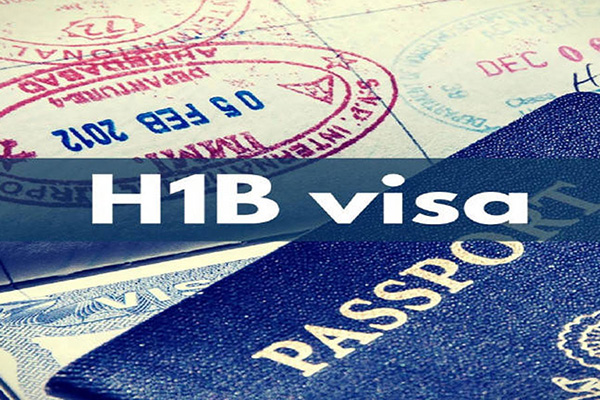
H-1B Visa News: The Trump administration has suffered a major setback regarding H-1B visas in the US. On Monday, a US federal judge blocked President Donald Trump’s plan to charge an additional fee of $100,000 to employers hiring foreign workers through the H-1B visa program.
In his ruling, US District Judge Richard Stearns stated that the order issued in September 2025 violated the constitutional principle of the ‘Separation of Powers.’ The court clarified that the authority to implement such financial provisions rests solely with Congress, not the presidential administration.
This decision is being hailed as a significant relief for H-1B visa holders, particularly Indian IT professionals, as the proposed fee would have made hiring foreign workers prohibitively expensive for US companies.
Judge Stearns’ ruling comes six months after a federal judge in Washington, D.C., sided with the Trump administration in a similar lawsuit filed by the US Chamber of Commerce. That judge had ruled that Congress had granted the President the authority to impose the proposed $100,000 fee on employers hiring foreign workers.
What is the H-1B visa?
The H-1B visa program allows employers to apply to hire foreign workers temporarily for specialized roles that require at least a bachelor’s degree.
According to the California Department of Justice, when applying for an H-1B worker, the employer must submit an application certified by the US Department of Labor. This application must demonstrate that hiring the H-1B worker will not adversely affect the wages and working conditions of US employees performing similar work. The US Congress limits the number of H-1B visas available annually to most private employers. Currently, this cap stands at 65,000, with an additional exemption of 20,000 visas for individuals holding a master’s degree or higher.
In September 2025, Trump issued an order imposing a $100,000 fee on new H-1B visa applications.
What did the September 2025 order state?
Trump and his associates argued that the program was being misused to hire foreign workers at lower wages, thereby sidelining American workers or causing them to lose their jobs.
In his order, Trump stated, “The misuse of the H-1B program poses a threat to national security because it discourages Americans from pursuing careers in science and technology, thereby jeopardizing American leadership in these fields.”
A sigh of relief, but is the matter truly over?
Sanjeev Joshipura, Executive Director of Indiaspora, told PTI, “All stakeholders associated with H-1B visas will breathe a sigh of relief following the court order, but the question remains: is this matter truly over?”
However, he also urged caution. He noted that the US administration could still create procedural hurdles for H-1B visa holders that fall within the scope of the law and cannot be legally challenged.
Referring to the recent friction between the administration and the judiciary, he said, “If the administration wishes to create obstacles for H-1B visa holders in line with its policies, it can do so through procedural means that do not violate US law.”
What does this mean for Indians?
The majority (approximately 70–72%) of all H-1B visas issued go to Indian citizens. Technology companies rely on hiring thousands of employees from countries like India and China every year; therefore, this decision is crucial for Indian professionals.
The proposed $100,000 fee could have made H-1B hiring prohibitively expensive, potentially leading many employers to cut back on sponsoring foreign professionals or reconsider the practice altogether.
This decision brings relief to both employers and Indian professionals seeking H-1B visas—such as engineers, software developers, researchers, doctors, and other skilled workers.
(With agency inputs)