
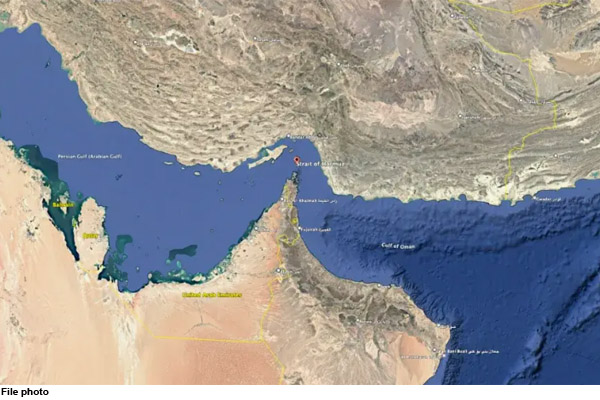
According to a report by ‘Nikkei’, a leading Japanese newspaper, crucial talks are underway between the United States and Iran regarding the Strait of Hormuz. Citing a diplomatic official in the Middle East, the report claims that both nations are discussing a proposal under which this strategic maritime route could be fully reopened to international shipping approximately 30 days after a potential peace agreement is reached. However, recent US military strikes in southern Iran—coupled with cautious statements from Secretary of State Marco Rubio—have somewhat dampened hopes for a swift resolution.
What is the 30-Day Plan? Major Revelation on US-Iran Talks
According to the Nikkei report, Iran intends to utilize a 30-day timeframe following any agreement to clear mines from the strait, after which vessels from all nations would be able to navigate the waterway freely and safely. Under the alleged terms, Iran would also cease levying transit fees on passing vessels; however, Iranian officials have indicated that charges for specific services—such as navigational assistance and environmental protection measures—would continue under a protocol to be established in conjunction with Oman, which is situated on the opposite side of the strait.
The same report further states that the ceasefire agreed upon in early April would be extended for an additional 60 days, with the intervening period to be utilized for negotiations regarding Iran’s nuclear program.
Ismail Baghai, a spokesperson for the Iranian Foreign Ministry, stated that the potential agreement does not contain specific details regarding the management of the Strait of Hormuz, emphasizing that negotiations on nuclear issues would only commence once a framework agreement has been reached. Tehran has consistently denied having any plans to develop nuclear weapons, despite possessing a stockpile of highly enriched uranium.
Agreement with Iran Possible in ‘A Few Days’: Marco Rubio
Speaking to journalists aboard his aircraft in Jaipur, India, U.S. Secretary of State Marco Rubio stated on Tuesday that reaching a final agreement with Iran could take “a few days”; this statement effectively sets aside any hope for an immediate resolution.
Rubio spoke explicitly regarding the centrality of the Strait of Hormuz to Washington’s stance. He told reporters, “The Strait must remain open; it will open one way or another—so it simply must remain open.” He added that the U.S. would give diplomacy every opportunity to succeed before considering dealing with Iran in “any other way.” In earlier remarks made in New Delhi, Rubio described the current state of negotiations as “something quite substantial on the table.” He pointed to ongoing discussions regarding the reopening of the Strait, as well as what he termed “a very real, significant, and time-bound negotiation on the nuclear issue.”
Major U.S. Military Action Amidst Peace Talks
These cautious diplomatic signals have emerged against the backdrop of renewed military action. The U.S. Central Command confirmed on Monday that it had carried out fresh strikes in southern Iran. These strikes targeted boats attempting to lay mines, as well as missile launch sites. Washington characterized these actions as “steps taken to protect our troops from threats posed by Iranian forces.”
According to Iranian news agencies, Iran stated on Monday that it had intercepted and shot down an “enemy” stealth drone using a new air defense system. However, Iran did not specify which country the aircraft belonged to.
These strikes occurred at a time when Iran’s chief negotiator and Foreign Minister were present in Doha to meet with the Prime Minister of Qatar to discuss a potential agreement to end the three-month-long conflict. An official associated with this visit told Reuters that the primary focus of the discussions held in Doha was the Strait of Hormuz and Iran’s stockpile of highly enriched uranium. The Governor of Iran’s Central Bank also participated in these talks to discuss the possibility of unfreezing Iran’s frozen assets as part of any final agreement.
Trump’s Warning on Truth Social: A Tough Stance on the Iran Deal
On Monday, U.S. President Donald Trump took to “Truth Social” to share his views on the current state of negotiations in a lengthy post. He stated that talks with Iran are progressing “quite well,” but simultaneously issued a warning that if these negotiations fail, new attacks would be launched.
Clarifying the administration’s negotiating stance in his signature blunt style, Trump wrote: “This deal will either be a ‘great deal’ for everyone, or there will be no deal at all.”
Why the Strait of Hormuz Remains Under the Spotlight
The strategic and economic interests linked to this strait are immense. Before the outbreak of conflict on February 28—marked by U.S. and Israeli strikes on Iran—between 125 and 140 vessels passed through the Strait of Hormuz daily. Since then, that number has plummeted to just a few dozen. This drastic decline in traffic has caused oil prices to surge and has also led to a sharp rise in the global cost of fuel, fertilizers, and food products.
Under normal circumstances, this waterway carries approximately one-fifth of the world’s oil and Liquefied Natural Gas (LNG), making it one of the most critical chokepoints in the global energy supply. In early Asian trading on Tuesday, US West Texas Intermediate crude oil traded slightly above Monday’s closing price, although it remained 5.5 percent below Friday’s close; this reflects the market’s volatile reaction to every shift in diplomatic momentum.
Escalating Tensions Involving Lebanon and Hezbollah
Beyond the negotiations with Iran, the broader regional situation remains precarious. Israeli Prime Minister Benjamin Netanyahu stated on Monday that Israel would intensify its attacks against the Iran-backed Hezbollah militia in Lebanon. Shortly thereafter, the Israeli military confirmed that it was conducting strikes against Hezbollah infrastructure in Lebanon’s eastern Bekaa Valley and other regions.
Israel and Lebanon had agreed to a ceasefire in mid-April; however, Israel has continued to carry out airstrikes—actions it characterizes as acts of self-defense against Hezbollah, a faction that was not included in that ceasefire agreement.
(With agency inputs)