
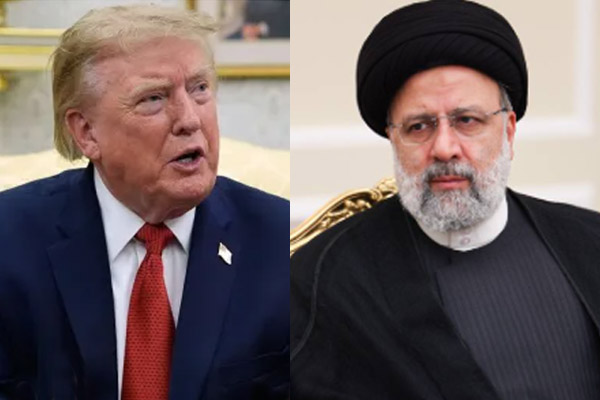
US-Iran Conflict: Tehran has hardened its stance following an impasse in negotiations aimed at permanently ending the conflict between Iran and the US. According to Reuters, a senior Iranian official stated that if diplomatic efforts fail, the country could adopt a “full-scale offensive” military strategy. This raises fears of escalating tensions in the Strait of Hormuz and the wider region.
This warning comes as US President Donald Trump has refused to extend the temporary truce established in June. Under that agreement, progress toward a comprehensive peace deal was expected by Monday, but the talks failed to advance.
The Iranian official stated that Tehran is prepared to make “difficult decisions” should the negotiations collapse. He also warned that Iran could undertake “timely and precise” military action to break any US naval blockade, potentially further heightening tensions in the Strait of Hormuz.
“Iranian entities must be prepared to escalate tensions in the Strait of Hormuz and the surrounding area,” the official told Reuters.
Iran-US Peace Talks Stall
The June 17 agreement had granted the US and Iran a 60-day window to negotiate a comprehensive deal addressing Iran’s nuclear program and US sanctions.
The agreement called for an immediate and permanent cessation of military actions on all fronts. However, the arrangement fell apart due to disputes over control and navigation rights in the Strait of Hormuz.
Iran maintains that a provision in the agreement grants it the right to manage this strategic waterway, which it shares with Oman. Washington has rejected this interpretation. This disagreement has also disrupted commercial shipping through the strait, a vital route for global energy supplies. Prior to the conflict, approximately one-fifth of the world’s shipments of oil and liquefied natural gas passed through this waterway.
Iran has warned that any failure to resolve the dispute could further escalate military tensions and prevent the resumption of normal tanker traffic.
Trump Refuses to Extend Truce
When asked on Monday whether Washington intended to extend the temporary agreement reached in June, Trump said “no.”
Meanwhile, according to an Iranian official, Tehran has set a deadline of several weeks for the US to implement the provisions of the previous agreement before it considers further talks.
Mediators are expected to convey Iran’s position to Washington and other governments in the region.
Iran is also holding separate talks with Oman regarding the management of the Strait of Hormuz. Tehran has stated that the negotiations are nearing an agreement, although progress has been slow.
Trump has issued consistently aggressive warnings regarding the waterway. According to reports, he told Fox News that if Oman obstructed US efforts, “we would bomb that country.”
Tehran’s Claim over Hormuz
Iranian Foreign Ministry spokesman Esmail Baghaei stated on Monday that Tehran already has laws in place regarding its sovereign rights over the Persian Gulf, the Strait of Hormuz, and the Sea of Oman.
Baghaei said the Foreign Ministry would cooperate with the Iranian parliament on laws concerning the country’s territorial and maritime rights.
Baghaei stated, “We already have laws addressing issues related to Iran’s sovereign rights in the Persian Gulf, the Strait of Hormuz, and the Sea of Oman.” He further stated that Tehran would take into account both existing laws and recent developments.
These remarks follow a statement by Trump, made a few days earlier, in which he said he planned to declare the Strait of Hormuz “US territory” following a war with Iran.
Speaking at a Republican rally on Long Island on Friday, Trump said he would make this announcement soon after defeating Iran.
Risk of a Major Conflict
This tension has escalated at a time when conflict has already spread across the Middle East. Thousands of deaths have been reported since the US and Israel launched attacks on Iran on February 28, with the majority of casualties occurring in Iran and Lebanon.
According to reports, Iran has also targeted US military bases and infrastructure in several countries, including Oman, Jordan, Kuwait, Israel, the United Arab Emirates, and Saudi Arabia.
Concerns regarding a major conflict have intensified due to attacks linked to the Iran-backed Houthi movement and persistent uncertainty surrounding shipping in the Red Sea and the Strait of Hormuz.
This standoff also poses a threat to the global energy market. Trump has warned Americans to brace for consistently high fuel prices resulting from the war.
(With agency inputs)